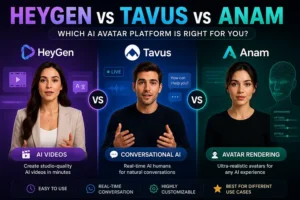
The Real Difference Nobody Explains Properly
The AI avatar industry is exploding right now.
Every week, a new “AI human” platform appears online claiming:
- realistic avatars
- live conversations
- AI agents
- emotional interaction
- digital humans
But here’s the problem:
Most people compare platforms like:
as if they are the same type of product.
They are NOT.
And this confusion causes many startups and mobile app builders to choose the wrong platform.
Because in reality:
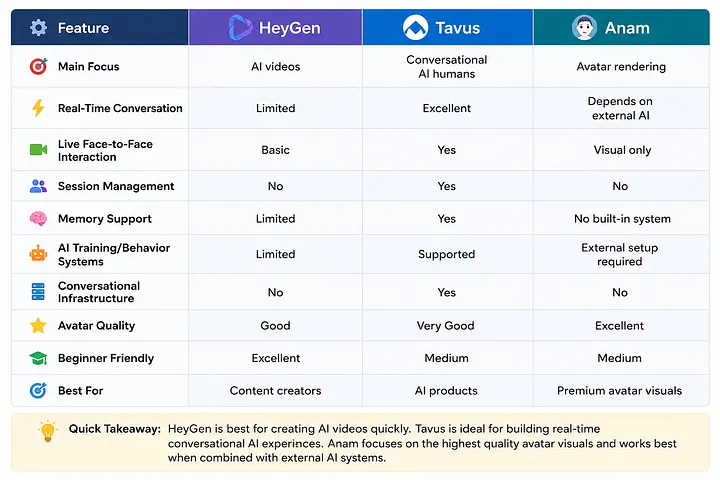
- HeyGen is mainly an AI video generation platform
- Tavus is a full conversational AI avatar platform
- Anam is primarily an avatar rendering platform
That distinction changes everything.
The Simplest Explanation
HeyGen → Creates AI videos
Tavus → Provides full AI conversation system with avatar
Anam → Provides realistic avatar rendering only
This is the most important thing to understand before integrating any of them into a mobile app.
1. HeyGen — Best for AI Video Generation
HeyGen Official Website
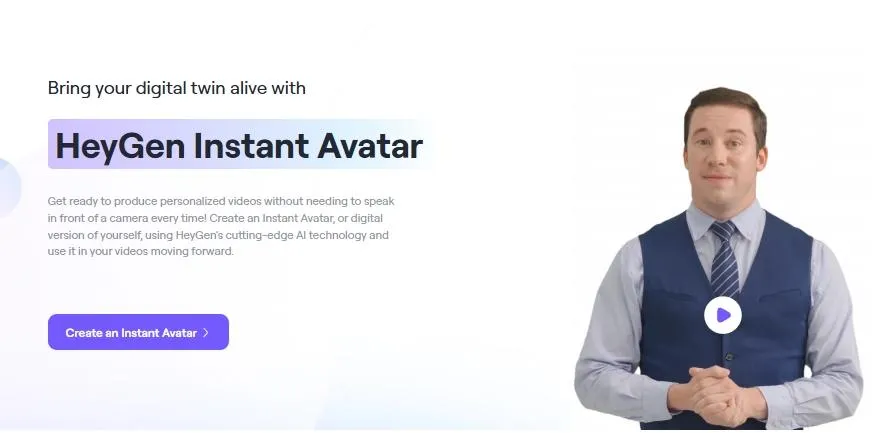
HeyGen became popular because it made AI avatars easy for everyone.
You simply:
- Type a script
- Choose an avatar
- Generate a video
And within minutes, you get a professional-looking AI spokesperson.
What HeyGen Is Actually Good At
HeyGen is excellent for:
- marketing videos
- training videos
- YouTube content
- onboarding videos
- multilingual content
- AI presentations
And honestly, for content creation, it’s one of the easiest platforms available.
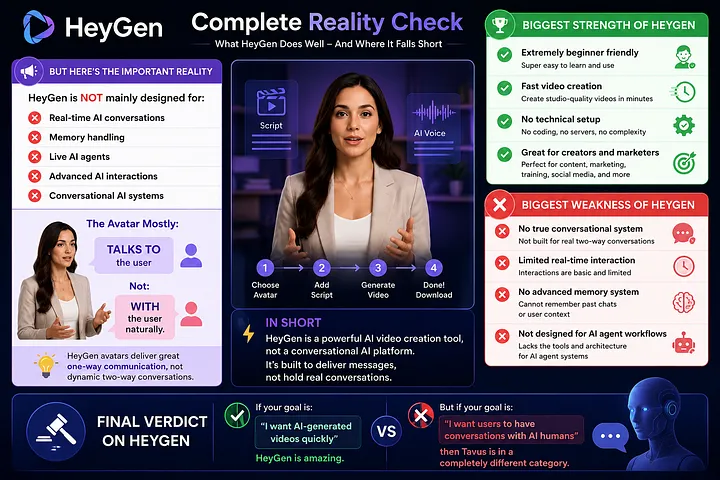
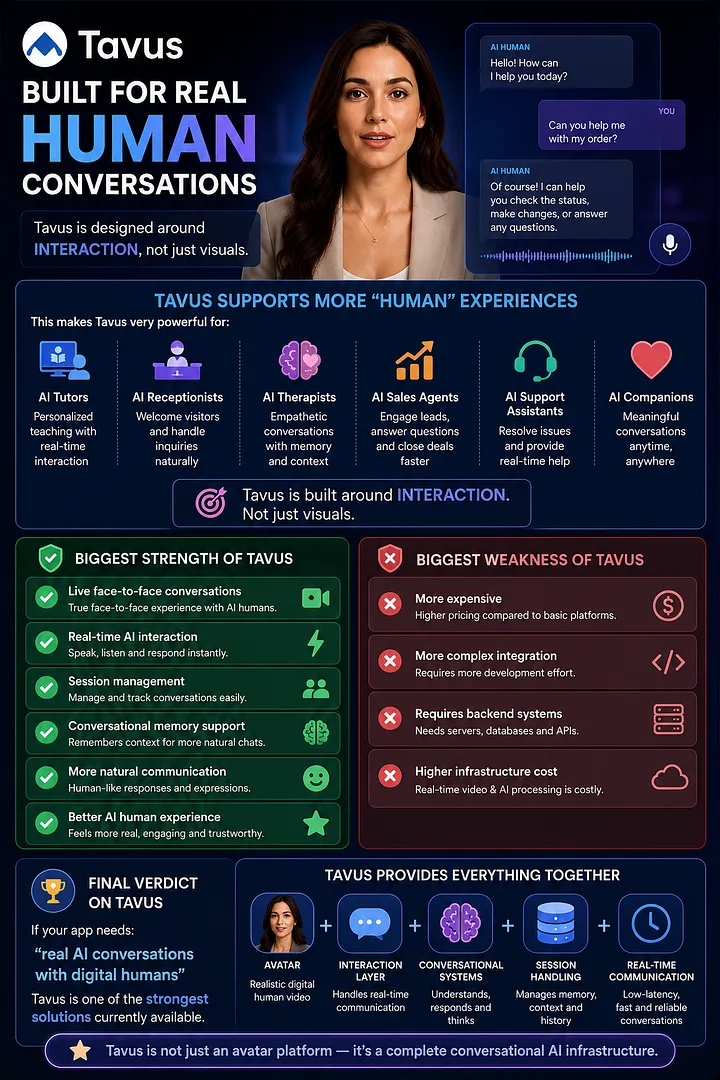
2. Tavus — A Complete Conversational AI Human Platform
Tavus Official Website
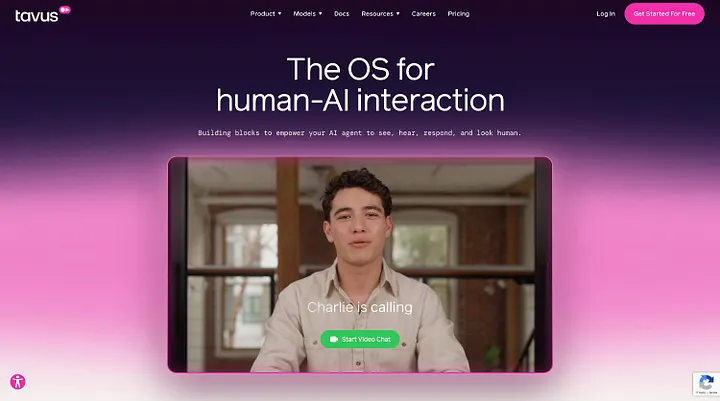
This is where things become very different.Tavus is NOT just an avatar platform.
It’s a:
full conversational AI human system.
That means Tavus handles much more than just showing a face on screen.
What Tavus Actually Provides
Tavus provides:
- live face-to-face AI conversations
- real-time interaction
- conversational flow
- interruption handling
- session management
- memory systems
- AI orchestration
- conversational behaviors
- streaming infrastructure
This is a huge difference compared to simple avatar platforms.
Tavus Feels Like Talking to an AI Person
With Tavus:
- users can speak naturally
- the AI responds live
- conversations feel dynamic
- the avatar reacts in real time
- interactions feel more human
Instead of:
watching an AI video
it feels closer to:
talking with an AI human on a video call.
Tavus Includes AI Conversation Logic
This is the part many people misunderstand.Tavus is not just rendering a face.
It also helps manage:
- conversation sessions
- interaction timing
- response behavior
- live communication flow
- conversational experience
So developers do not need to build everything from scratch.
3. Anam — Mainly an Avatar Rendering Platform
Anam Offical Website
Now let’s talk about Anam.
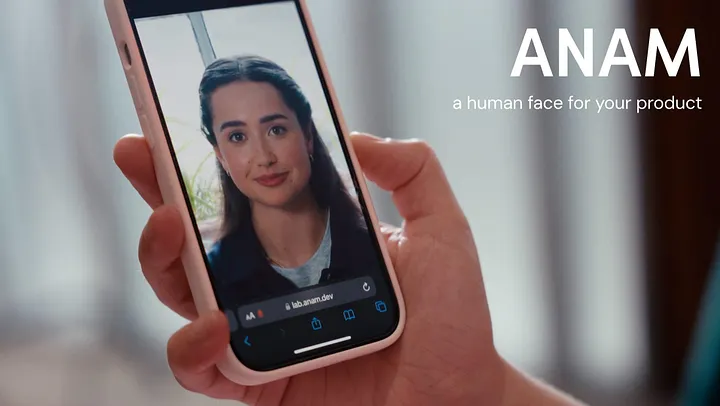
Anam is actually very impressive visually.
The avatars often look:
- cinematic
- premium
- realistic
- high-quality
But here’s the important distinction:
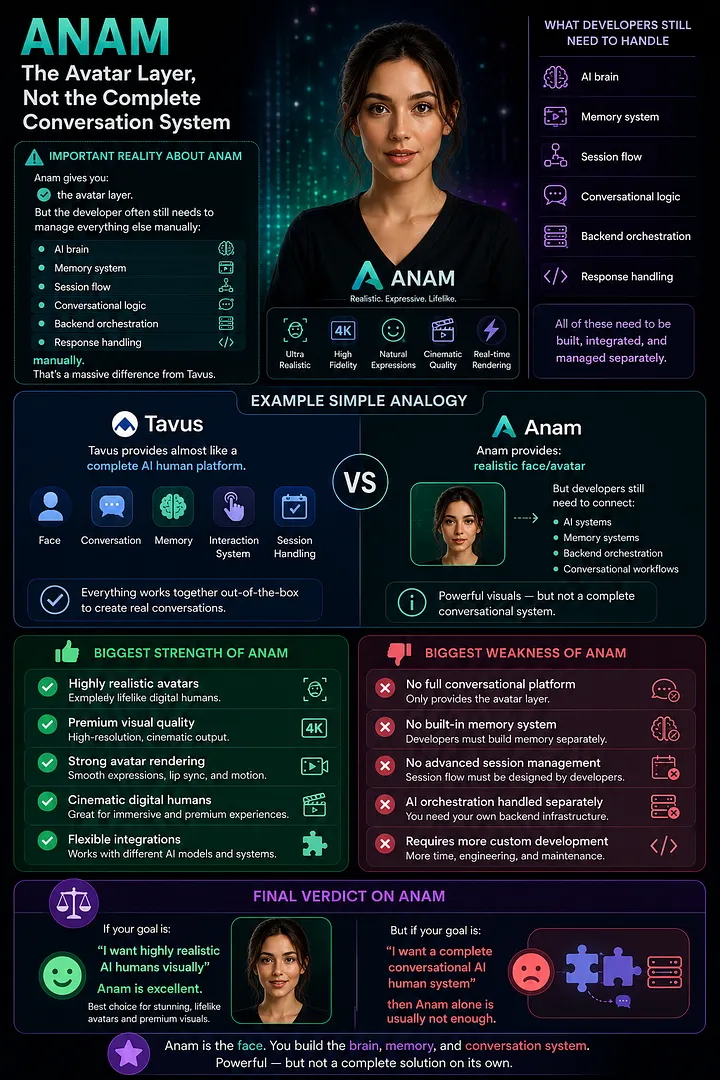
Anam mainly focuses on:
avatar rendering and visual experience.
Not full conversational AI infrastructure.
What Anam Actually Provides
Anam mainly provides:
- realistic avatar rendering
- facial animation
- lip sync
- digital human visuals
- avatar streaming
It focuses heavily on: how the AI human looks.
What Anam Does NOT Fully Handle
Compared to Tavus, Anam does NOT fully provide:
- advanced session management
- built-in conversational memory
- complete AI orchestration
- full conversational flow systems
- trained AI behavior systems
- ready-made conversational infrastructure
This means:
developers usually need to build these systems separately.
The REAL Comparison
So Which One Should You Choose?
Choose HeyGen If…
You mainly want:
- AI videos
- marketing content
- training videos
- social media content
Choose Tavus If…
You want:
- real-time AI conversations
- AI companions
- AI tutors
- AI support agents
- conversational AI humans
because Tavus provides:
- session handling
- conversational systems
- memory support
- interaction infrastructure
not just avatars.
Choose Anam If…
You want:
- highly realistic avatar visuals
- premium digital humans
- custom AI workflows
- your own backend AI system
and you are comfortable building:
- memory systems
- conversational orchestration
- session management
- AI logic
yourself.